_edited.jpg)
The Silent Thief of Sleep

By: Lights Out | Insomnia Campaign
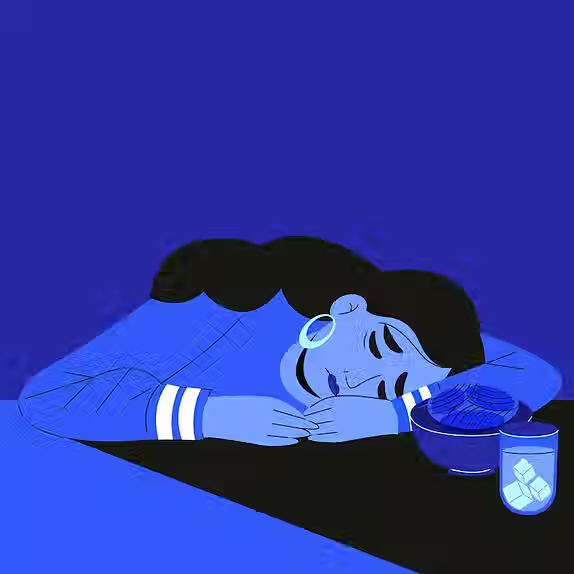
Have you ever felt the whole world has fallen asleep but you? The clock blinks, 3:00 AM, and you’re lying in bed, eyes wide open. Your mind won’t stop racing, and your body is heavy from exhaustion, begging for rest, yet your thoughts won’t slow down. You try everything, changing pillows, counting sheep, and even gaslighting yourself into thinking you have nothing to do tomorrow. But nothing works. Sleep doesn’t just feel hard to get; it can feel impossible. In these quiet hours, stress is louder than any alarm, filling the silence with pressure and panic. And while night is meant for rest, for many, it is a battlefield. The restless struggle reveals how stress doesn’t only follow us throughout the day, but waits for us at night, stealing the sleep that we desperately need.
What many people don’t realize is that stress and insomnia are deeply intertwined. In fact, stress is one of the most common causes of insomnia! (A sleeping disorder which 12% of Americans have). Stress can cause your brain to stay in a constant state of alertness. This can make it difficult for your body to switch into rest mode. Instead of winding down at night, your brain is replaying a variety of things, making sleep feel out of reach. Stress also triggers the release of hormones like cortisol, which are meant to keep the body awake and ready to respond, not to rest. Over time, this cycle trains the brain to associate bedtime with anxiety or a time to overthink rather than allocating it as a time to sleep. Stress doesn't only make sleeping harder, but it also begins to convince the brain that night is another riddle to solve. As the mind continues to stay awake, insomnia continues to thrive, turning stress into fuel, which keeps us up until 3:00 AM, not by choice, but rather against our own will.
Insomnia doesn’t look the same for everyone; it can quietly drain energy for some while completely disrupting daily life for others. For some, insomnia symptoms begin to dissipate once the stressful situation ends and the stress subsides. However, many people fall into a pattern of sleep loss and daytime anxiety that can contribute to stress. Elevated stress levels have also been shown to influence the structural organization of sleep, including the duration of each sleep stage. People experiencing chronic stress may experience a decrease in the amount of time spent in deep sleep and disruptions during REM (light rest) sleep. When the day finally ends, the responsibilities don’t always stop, making it hard for some people to quiet their thoughts and fall asleep. In fact, a recent survey from the American Academy of Sleep Medicine reveals that nearly 75% of Americans report sometimes, always, or often experiencing interrupted sleep due to stress, and over 65% Americans report losing sleep due to anxiety.
Stress isn’t just a little bit of pressure left on your shoulders. It can be a battle that you are constantly fighting to survive. No matter where the stress stems from, the impact towards your mental health is inevitable. Stress puts your body in a constant fight or flight state, contributing to the development of anxiety, irritability, and depression, as it puts you at risk of burnout and rewires your brain chemistry. The constant strain can quietly build a cage around you, restricting your ability to care for yourself. Academic pressures, deadlines, meetings, and the need to keep up with grades or work replay endlessly in your mind with no way to shut them off. To add on, sleep is a vital component of maintaining your mental health, but with constant stress, your glymphatic system (removing metabolic waste and toxins in your central nervous system), which is most active during sleep, is not able to operate correctly, which allows stress-related toxins to accumulate in your brain. Therefore, the combination of stress and mental health disorders is practically a recipe to destroy your sleep, one of the body’s most essential functions.
Stress and sleep are locked in a cycle that is very difficult to escape. Stress keeps the mind alert when the body desperately needs rest to recharge, and the lack of sleep only deepens the stress the following day, continuing the endless cycle. It begins as a few restless nights, but it slowly turns into a pattern that can affect mental health, physical health, and overall well-being. Sleep is not a luxury; it is a necessity that allows the brain to regulate emotions, recover, and prepare for the next day. Recognizing how stress affects the sleep cycle is the first step to breaking out of insomnia. By prioritizing mental health, resting, meditating, maintaining a consistent sleeping schedule, creating a restful environment, and setting boundaries, we can easily overcome the endless cycle. So, when your thoughts no longer keep you up at 3:00 AM, sleep can finally overtake and give your body the reassurance it needs.

Lightsout Campaign works to help spread awareness about insomnia. Help people learn about what it is, its causes, effects, symptoms, and much more. We chose to focus on insomnia because while many people know or have heard of it, they often don't fully understand how serious it can truly be or how much it affects daily life, overall well-being, and mental health. Through this campaign, we work to break common misconceptions and inform people on a deeper level about insomnia. As high schoolers, we all deal with stress constantly tampering with our rest. The stress of keeping up with grades, getting assignments in on time, extracurricular activities, clubs, and getting up early in the morning. These are just a few things that throw off our sleep schedule, and we hope that this article is able to address and make you more aware of the risk stress has to your sleep. Sleep is a non-negotiable function that our body needs to survive; together, let's raise awareness. Please support us as we create insomnia awareness.
Socials
TikTok: Lightsout.campaign
Instagram:Lightsout_campaign
Bibliography:
Gardener, Abigail. “How Stress Affects the Brain | American Brain Foundation.” American Brain Foundation, 27 Aug. 2024, www.americanbrainfoundation.org/how-stress-affects-the-brain/.
Schneiderman, Neil, et al. “Stress and Health: Psychological, Behavioral, and Biological Determinants.” Annual Review of Clinical Psychology, vol. 1, no. 1, 2005, pp. 607–628. National Library Of Medicine, pmc.ncbi.nlm.nih.gov/articles/PMC2568977/,
Celmer, Lynn. “Survey Shows 12% of Americans Have Been Diagnosed with Chronic Insomnia.” American Academy of Sleep Medicine – Association for Sleep Clinicians and Researchers, 14 June 2024, aasm.org/survey-shows-12-of-americans-have-been-diagnosed-with-chronic-insomnia/.
Cleveland Clinic. “Cortisol: What It Is, Function, Symptoms & Levels.” Cleveland Clinic, Cleveland Clinic, 2021, my.clevelandclinic.org/health/articles/22187-cortisol.


this is really nice and has extremely good facts! i really appreciate the awareness u are bringing
This is so greateigh
Nice Artical. Great job
Thank you for sharing such thoughtful insights on insomnia,something so many of us overlook or don’t even realize we’re experiencing. Really appreciate you spreading awareness and reminding people to pause, listen to their bodies, and take better care of themselves. This kind of initiative truly matters 🤍
This is soo amazing!